AI Fashion Models: How Smart Brands Are Cutting Costs and Carbon Footprints in 2025
📑 Table of Contents
- What Are AI Fashion Models?
- Why Western Brands Are Making the Switch
- The Sustainability Advantage
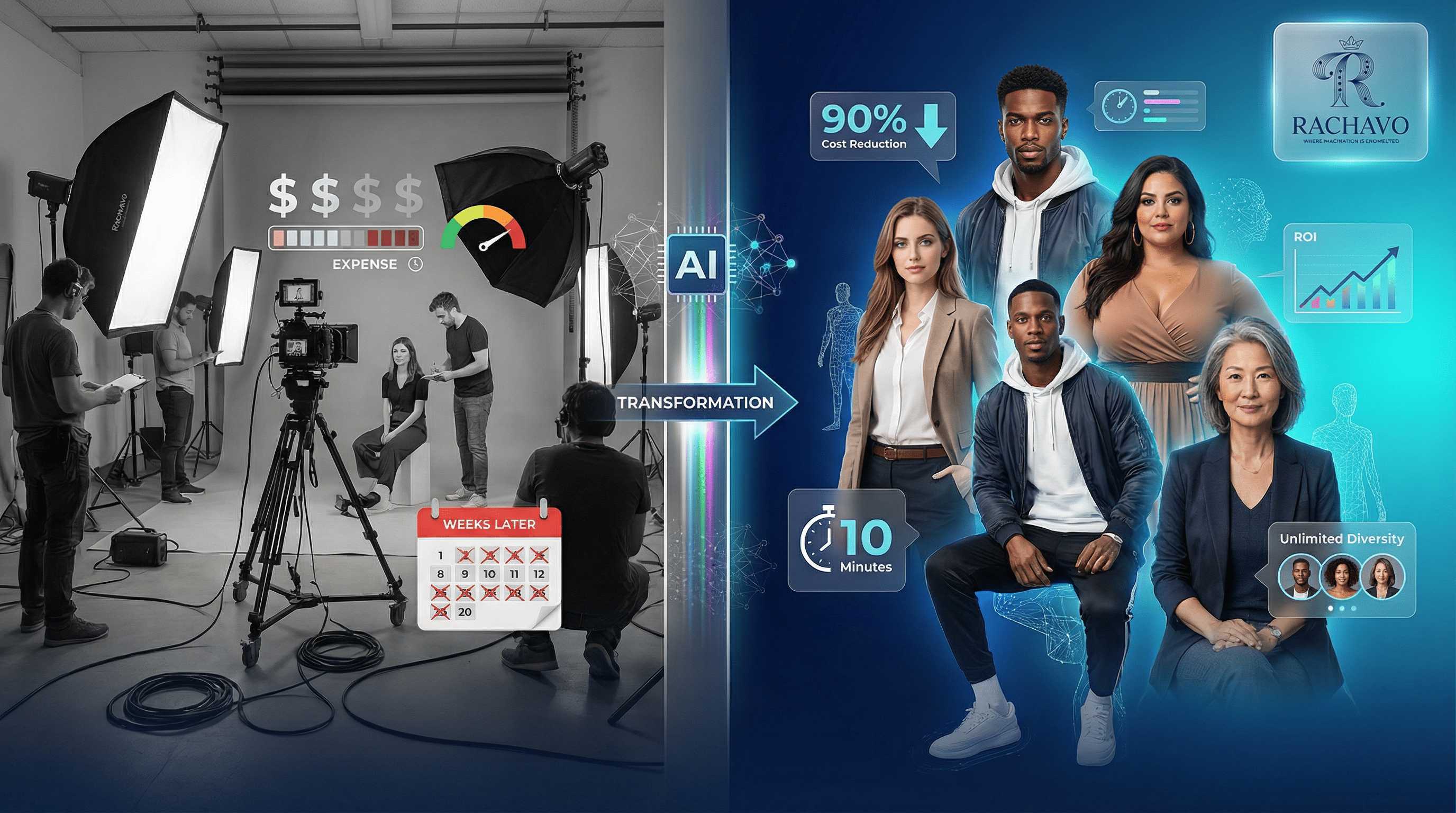
- Cost Comparison: Traditional vs AI Photography
- Size-Inclusive Marketing Made Simple
- How to Create AI Model Images for Your Products
- Platform Integration (Shopify, Amazon, Etsy)
- Brand Success Stories
- Addressing Common Concerns
- Getting Started
- FAQ
- Conclusion
What Are AI Fashion Models?
AI fashion models are computer-generated humans that look indistinguishable from real people in photographs. Using advanced generative AI technology, these digital models can wear your actual products and appear in professional-quality images.
Key characteristics:
- Photorealistic – Natural skin texture, realistic lighting, authentic poses
- Infinitely customizable – Any body type, age, ethnicity, or appearance
- Instantly available – No scheduling, no travel, no logistics
- Environmentally friendly – Zero carbon footprint from traditional shoots
Unlike CGI avatars or cartoon characters, modern AI models pass the "scroll test"—customers can't tell they're not real when browsing product pages.
Why Western Brands Are Making the Switch
The fashion industry faces unprecedented pressure. Rising costs, sustainability demands, and consumer expectations for diverse representation are forcing brands to innovate.
The Perfect Storm Driving Adoption
Labor Cost Crisis:
Model rates in major Western markets have increased substantially over recent years. Professional photographers, stylists, and studio rentals add additional expenses. A single photoshoot in New York or London can cost thousands of dollars for just a few final images.
Sustainability Pressure:
European regulations are tightening. California's climate disclosure rules affect fashion brands. Consumers—especially Gen Z—actively choose sustainable brands. Traditional photoshoots involve flights, ground transportation, and significant energy consumption.
Diversity Demands:
67% of American consumers say they're more likely to purchase from brands showing diverse representation. Yet traditional photoshoots typically feature only 2-3 model body types due to budget constraints.
Speed Requirements:
Fast-fashion competitors launch new styles weekly. Traditional photography timelines of 2-4 weeks can't keep pace. Brands need same-day product imaging to stay competitive.
The Sustainability Advantage
This is where AI models genuinely shine for environmentally-conscious Western brands.
Carbon Footprint Comparison
Traditional Fashion Photoshoot:
- Model travel (flights, ground transport)
- Crew travel and commuting
- Studio energy consumption
- Equipment and lighting power
- Post-production computing
- Physical sample shipping
AI Model Generation:
- Server processing (cloud-based, often renewable-powered)
- Minimal local computing
- Digital product upload only
Studies estimate AI-generated fashion imagery reduces carbon emissions by 85-95% compared to traditional shoots.
Aligning with ESG Goals
For publicly traded fashion companies and B-Corps, AI models support:
- Scope 3 emissions reduction
- Sustainability reporting metrics
- Consumer transparency claims
- Environmental certifications
Brands can legitimately claim reduced environmental impact in their marketing—a genuine competitive advantage in eco-conscious markets.
Cost Comparison: Traditional vs AI Photography
Let's examine realistic Western market costs:
Traditional Model Photography (Per Product)
| Expense | Typical Range |
| Model fee (half-day) | $800-2,500 |
| Photographer | $500-1,500 |
| Studio rental | $300-800 |
| Makeup/Hair | $200-400 |
| Stylist | $300-600 |
| Editing/Retouching | $50-150 per image |
Total per product: $400-800+ (assuming multiple products shot per session)
AI Model Generation (Per Product)
| Expense | Typical Range |
| Platform subscription | $50-300/month |
| Per-image cost | $0.50-2.00 |
| Your time | 10 minutes |
Total per product: $2-10
Savings: 95%+ reduction in direct costs
Volume Economics
For a brand with 200 SKUs:
- Traditional: $80,000-160,000 annually
- AI-powered: $2,000-4,000 annually
These savings can fund actual product development, marketing, or sustainability initiatives.
Size-Inclusive Marketing Made Simple
Western consumers increasingly demand to see products on bodies resembling their own. AI models solve this affordably.
The Business Case for Diversity
Statistics that matter:
- 68% of American women wear size 14+
- Plus-size fashion market: $32 billion in US alone
- Customers are 67% more likely to purchase when seeing their body type
- Return rates drop 25-30% with better size visualization
What's Now Possible
Generate the same garment on:
- Multiple sizes: XS through 4XL representations
- Various body types: Petite, athletic, curvy, plus-size
- Age ranges: 20s through 60s+
- Diverse ethnicities: Reflecting your actual customer base
Previously, showing one dress on five different body types required five model bookings. Now? One product photo, five AI generations, fifteen minutes total.
Implementation Strategy
- Identify your core customer segments – Who actually buys from you?
- Generate representative models – Match AI models to real customer demographics
- A/B test results – Measure which representations drive conversions
- Scale what works – Apply winning formulas across your catalog
How to Create AI Model Images for Your Products
The process is surprisingly straightforward.
Step 1: Prepare Your Product Photo
What you need:
- Clear product image (minimum 800x800px)
- Good, even lighting
- Complete garment visible
- Any background works (AI removes it)
Acceptable formats:
- Flat lay on white/neutral background
- Mannequin or ghost mannequin shots
- Hanger photography
- Even existing model photos (AI swaps the person)
Step 2: Choose Your Platform
Several AI fashion model generators serve Western markets:
RACHAVO – Comprehensive features with excellent customization for diverse body types, Western model options, and marketplace-ready output formats.
👉 Try RACHAVO's Virtual Model Generator: www.rachavo.com
Step 3: Configure Model Parameters
Customize:
- Gender: Female, male, non-binary options
- Age range: 18-65+ representations
- Body type: Slim, athletic, regular, curvy, plus-size
- Ethnicity: Caucasian, African American, Hispanic, Asian, mixed heritage
- Height: Visual representation from petite to tall
Step 4: Select Pose and Background
Pose options:
- Standard e-commerce (front, back, side, 3/4)
- Lifestyle (walking, sitting, natural movement)
- Action shots (for activewear, casual wear)
Background choices:
- Clean studio (white, gray, gradient)
- Lifestyle settings (urban, home, outdoor)
- Seasonal themes (summer, winter, holiday)
Step 5: Generate and Download
- Click generate (processing takes 30-90 seconds)
- Review output for quality and accuracy
- Download in platform-specific dimensions
- Upload directly to your sales channels
Platform Integration
AI-generated images work seamlessly with major Western e-commerce platforms.
Shopify
- Upload directly to product galleries
- Use with apps like Loox, Judge.me for reviews
- Integrate into email marketing flows
Amazon (US, UK, EU)
- Meets all image quality requirements
- Generate main image + lifestyle shots
- Create A+ Content visuals
Etsy
- Perfect for handmade/boutique sellers
- Professional imagery at indie budgets
- Lifestyle shots for Pinterest marketing
WooCommerce
- Direct image upload
- Variation images for sizes/colors
- SEO-optimized file naming
Brand Success Stories
Case Study: Portland-Based Sustainable Fashion Brand
Challenge: Committed to carbon neutrality but photography emissions contradicted brand values.
Solution: Switched entirely to AI-generated product imagery.
Results:
- 92% reduction in photography-related carbon emissions
- Annual savings of $45,000+ in photography costs
- Launched size-inclusive campaign (XS-4XL) for first time
- Customer engagement increased 38%
Case Study: UK Dropshipping Entrepreneur
Challenge: Testing new products required expensive photography before knowing if items would sell.
Solution: AI models for all initial product testing.
Results:
- Test products same-day (vs 2-week wait previously)
- Kill underperforming products faster (less capital wasted)
- Successful products get professional human photography
- Profit margins improved by reducing failed product investment
Addressing Common Concerns
"Will customers know the difference?"
Most can't distinguish high-quality AI images from traditional photography. In blind tests, identification rates are below 15%. For e-commerce purposes, the realism is more than sufficient.
"Is this legal?"
Completely legal in the US, UK, EU, Canada, and Australia. AI-generated models don't represent real people, so no image rights are violated. Ensure your product representation is accurate—that's the only legal consideration.
"Won't this hurt my brand authenticity?"
For product catalog images, customers care about seeing the product clearly—research shows 71% don't mind AI models for this purpose. Reserve human models for brand campaigns and storytelling content where emotional connection matters.
"What about model jobs?"
AI primarily replaces catalog work, not high-fashion editorial or campaigns. The industry is expanding—more content is needed than ever. Many models now diversify into influencer work and brand ambassadorships.
Getting Started
Start Small
- Select 10-20 products for initial testing
- Generate AI model images
- A/B test against existing images
- Measure conversion rate differences
- Scale based on results
Recommended Approach for 2025
Hybrid strategy:
- AI models for: Product catalogs, marketplace listings, testing new items, size variations
- Human models for: Brand campaigns, video content, emotional storytelling, influencer collaborations
This balances efficiency with authenticity.
❓ FAQ
Q: How long does image generation take?
Typically 30-90 seconds per image. A 100-product catalog can be completed in a single afternoon.
Q: What resolution are the final images?
Most platforms output 2000x2000px or higher—exceeding requirements for all major marketplaces.
Q: Can I show the same product on multiple model types?
Yes—this is a primary advantage. Generate unlimited variations at minimal additional cost.
Q: Do I need technical skills?
No. Modern platforms are designed for non-technical users. Upload, configure, generate, download.
🎯 Conclusion
AI fashion models aren't replacing creativity—they're democratizing professional imagery.
For Western brands in 2025, the benefits are clear:
- ✅ 95%+ cost reduction vs traditional photography
- ✅ 85-95% carbon footprint reduction
- ✅ Unlimited diversity and size representation
- ✅ Same-day product launches
- ✅ Professional imagery at startup budgets
The early adopters are already gaining competitive advantages. The question isn't whether AI models will become industry standard—it's how quickly your brand will adapt.
Ready to Transform Your Product Photography?
See how AI models can work for your brand. Upload a few products, generate professional images, and experience the difference.
👉 Try RACHAVO's Virtual Model Generator: www.rachavo.com
Upload 5 products. Generate diverse model images. See your catalog transform.