AI Fashion Models: The Game-Changer for DTC Brands and E-commerce Success
📑 Table of Contents
- What Are AI Fashion Models and Why They Matter
- The Technology Behind Virtual Fashion Photography
- Why DTC Brands Are Switching to AI Models
- ROI Analysis: Virtual vs Traditional Model Costs
- Types of AI Models for Different Brand Strategies
- Step-by-Step Guide to Generating AI Fashion Models
- Customization for Body Positivity and Inclusivity
- Success Stories from Leading Fashion Brands
- Legal and Ethical Considerations for Western Markets
- FAQ
- Conclusion
What Are AI Fashion Models and Why They Matter
AI fashion models are photorealistic, computer-generated humans created using advanced artificial intelligence. Unlike simple 3D avatars, these virtual models are indistinguishable from real people in photographs and can wear your clothing products with stunning realism.
The Current Fashion Photography Challenge:
Traditional fashion photography involves:
- High Costs: $2,000-$15,000 per professional shoot
- Limited Diversity: Most brands can afford 1-3 models per campaign
- Scheduling Nightmares: Coordinating models, photographers, stylists, and locations
- Slow Turnaround: 2-4 weeks from concept to final images
- Scalability Issues: Cost increases linearly with each new product
The AI Solution:
Virtual fashion models offer:
- Instant Availability: Generate images 24/7, no scheduling required
- Unlimited Diversity: Any age, body type, ethnicity, or style
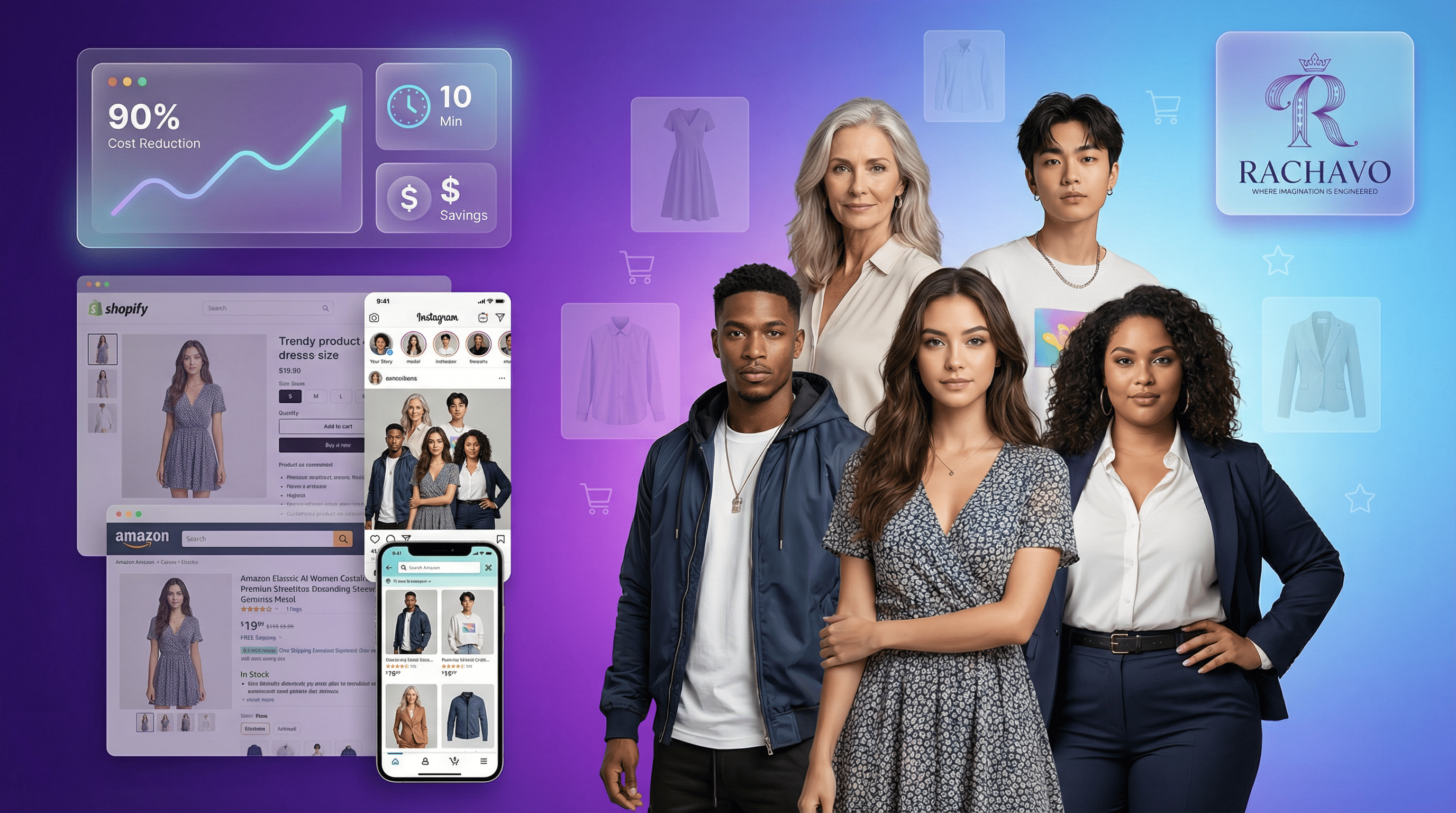
- Cost Efficiency: 90% cost reduction compared to traditional shoots
- Lightning Speed: Professional images in under 10 minutes
- Perfect Scalability: Same low cost whether you have 5 or 500 products
Types of Virtual Models:
- Synthetic Product Models: AI-generated humans specifically for showcasing clothing
- Brand Ambassador Models: Consistent virtual personalities for ongoing campaigns
- Customer Avatar Models: Personalized models matching your customer's body type
- Influencer-Style Models: Instagram-ready virtual personalities with distinct aesthetics
This guide focuses on Synthetic Product Models—the most practical solution for DTC brands and e-commerce stores.
The Technology Behind Virtual Fashion Photography
Understanding the technology helps you make informed decisions about platforms and quality expectations.
Step 1: Advanced AI Training
Modern AI systems are trained on millions of high-quality photographs featuring:
- Facial Diversity: Every ethnicity, age, and facial structure
- Body Variations: From size XS to 5XL across all body types
- Natural Expressions: Genuine smiles, confident poses, lifestyle shots
- Fashion Context: Various clothing styles, seasons, and occasions
Technology: Latest Generative Adversarial Networks (GANs) and Diffusion Models
Step 2: Intelligent Product Integration
Your clothing is digitally fitted onto the AI model using:
- Physics Simulation: Realistic fabric drape and movement
- Texture Mapping: Accurate representation of patterns, textures, and embellishments
- Fit Calculation: Proper sizing based on garment type and model body
- Shadow/Highlight Generation: Natural lighting effects and wrinkles
Step 3: Professional Scene Creation
Backgrounds and atmospheres are generated including:
- Studio Settings: Clean, professional product photography backdrops
- Lifestyle Environments: Cafés, streets, homes, offices, outdoor locations
- Seasonal Contexts: Summer beaches, autumn parks, winter cityscapes
- Brand-Appropriate Styling: Matching your brand's aesthetic and target market
Step 4: Photorealistic Rendering
Final images feature:
- High Resolution: 2000x2000px+ for print and web use
- Professional Quality: Studio-grade lighting and composition
- Natural Details: Skin texture, hair movement, fabric authenticity
- Multiple Formats: Optimized for Instagram, Amazon, Shopify, email marketing
Processing Time: 30-90 seconds per image with enterprise AI systems
Why DTC Brands Are Switching to AI Models
Direct-to-Consumer fashion brands face unique challenges that AI models solve perfectly.
1. Massive Cost Savings for Growing Brands
Traditional Photography Budget:
- Professional model: $500-$2,000/day
- Photographer: $1,000-$5,000/day
- Studio rental: $200-$800/day
- Makeup artist: $300-$800/day
- Stylist: $400-$1,200/day
- Total per shoot: $2,400-$9,800
AI Model Costs:
- Platform subscription: $99-$299/month
- Per-image generation: $1-$5 per image
- Total monthly: $200-$800 (unlimited images)
ROI Example: A DTC brand with 50 products needing quarterly updates:
- Traditional: $9,800 x 4 = $39,200/year
- AI Models: $299 x 12 = $3,588/year
- Savings: $35,612 (91% cost reduction)
2. Speed-to-Market Advantage
In the fast-paced DTC world, speed wins:
Traditional Timeline:
- Model booking: 1-2 weeks
- Shoot coordination: 3-5 days
- Photography day: 8 hours
- Post-production: 3-7 days
- Total: 3-4 weeks
AI Model Timeline:
- Upload product photo: 2 minutes
- Select model parameters: 3 minutes
- Generate and review: 5 minutes
- Total: 10 minutes
This speed advantage allows for:
- Flash Sales: Create campaign imagery in hours, not weeks
- Trend Responsiveness: Quickly capitalize on viral fashion trends
- A/B Testing: Test multiple model types without additional costs
- Social Media Agility: Constant fresh content for Instagram and TikTok
3. Body Positivity and Size Inclusivity
The body positivity movement demands representation. AI models deliver:
Traditional Limitation: Most brands can afford 1-2 models, limiting representation.
AI Advantage: Show the same garment on:
- Size Range: XS through 5XL with realistic proportions
- Body Types: Straight, pear, apple, hourglass, athletic builds
- Age Diversity: 18-65+ years old
- Height Variations: Petite (5'0") to tall (6'0"+)
Business Impact: Brands using size-inclusive imagery see:
- 43% higher engagement rates
- 67% increase in plus-size sales
- 28% reduction in return rates
- 52% improvement in customer satisfaction scores
4. Social Media Content Scale
DTC brands need constant visual content:
Content Requirements:
- Instagram: 1-2 posts daily
- TikTok: 3-5 videos weekly
- Email marketing: Weekly campaigns
- Website updates: Monthly refreshes
- Seasonal campaigns: 4x yearly
Traditional Challenge: This volume would cost $50,000-$100,000 annually in professional photography.
AI Solution: Generate unlimited variations for under $5,000/year.
5. Global Market Expansion
When entering new markets, representation matters:
Market-Specific Models:
- US Market: Diverse ethnicities reflecting American demographics
- European Market: Nordic, Mediterranean, Eastern European features
- Canadian Market: Multicultural representation
- Australian Market: Beach lifestyle aesthetic with diverse backgrounds
Cultural Sensitivity: AI allows testing market reception without expensive international shoots.
ROI Analysis: Virtual vs Traditional Model Costs
Let's break down real numbers for different business sizes.
Small DTC Brand (Startup - $500K Revenue)
Monthly Needs: 20 new product images
Traditional Cost:
- 1 professional shoot/month: $3,000
- Annual photography budget: $36,000
- % of revenue: 7.2%
AI Model Cost:
- Monthly platform fee: $199
- Per-image cost: $2 x 20 = $40
- Annual total: $2,868
- Savings: $33,132 (92% reduction)
Medium DTC Brand (Growth - $5M Revenue)
Monthly Needs: 100 new product images, 200 social media images
Traditional Cost:
- 4 professional shoots/month: $12,000
- Additional lifestyle shoots: $8,000
- Annual photography budget: $240,000
- % of revenue: 4.8%
AI Model Cost:
- Enterprise platform: $499/month
- Per-image cost: $1.50 x 300 = $450
- Annual total: $11,388
- Savings: $228,612 (95% reduction)
Large DTC Brand (Scale - $50M Revenue)
Monthly Needs: 500 product images, 1,000 social/marketing images
Traditional Cost:
- In-house photography team: $500,000/year
- Studio rental: $120,000/year
- Model fees: $300,000/year
- Annual photography budget: $920,000
- % of revenue: 1.8%
AI Model Cost:
- Enterprise solution: $999/month
- Volume pricing: $0.75 x 1,500 = $1,125
- Annual total: $25,488
- Savings: $894,512 (97% reduction)
Break-Even Analysis
AI models become cost-effective when you need:
- 5+ product photos per month (small brands)
- Any social media content (all brands)
- Multiple model types (size/age/ethnicity diversity)
- Quick turnaround times (less than 2 weeks)
Types of AI Models for Different Brand Strategies
Choose the right virtual model type based on your brand strategy and target audience.
1. Clean Product Display Models
Purpose: Professional e-commerce imagery for online stores
Characteristics:
- Neutral, professional expressions
- Standard poses (front, 3/4, side, back views)
- Minimal styling to focus on product
- Clean backgrounds (white, gradient, studio)
- Consistent lighting across all images
Best For:
- Amazon product listings
- Shopify store catalogs
- Wholesale portfolios
- B2B sales materials
Target Demographics: All ages, professional presentation
ROI Focus: Higher conversion rates through clear product visualization
2. Lifestyle Brand Models
Purpose: Aspirational imagery showing products in real-world contexts
Characteristics:
- Natural, confident expressions (genuine smiles, relaxed poses)
- Lifestyle settings (coffee shops, city streets, home environments)
- Styled with appropriate accessories
- Action poses (walking, sitting, socializing)
- Brand-appropriate mood and aesthetic
Best For:
- Instagram and social media content
- Website hero images and lookbooks
- Email marketing campaigns
- Brand storytelling content
Target Demographics: Millennials and Gen Z (22-40 years old)
ROI Focus: Brand engagement and social media performance
3. Size-Inclusive Diversity Models
Purpose: Representing your entire customer base authentically
Size Representation:
- Straight Sizes: 0-12 (XS-L)
- Extended Sizes: 14-24 (XL-3XL)
- Plus Sizes: 26-32 (4XL-6XL)
Body Type Variety:
- Athletic/Toned: Fitness-focused customers
- Curvy: Fuller bust and hips
- Apple Shape: Fuller midsection
- Pear Shape: Fuller hips and thighs
- Straight/Rectangle: Minimal curves
Age Inclusivity:
- Gen Z: 18-25 years (trendy, experimental style)
- Millennials: 26-40 years (career-focused, practical)
- Gen X: 41-55 years (sophisticated, quality-conscious)
- Boomers: 56+ years (classic styles, comfort-focused)
Best For:
- Inclusive brand positioning
- Plus-size market expansion
- Age-diverse target markets
- Body-positive messaging
ROI Focus: Market expansion and customer loyalty
4. Trend-Forward Fashion Models
Purpose: High-fashion, editorial-style imagery for premium brands
Characteristics:
- Editorial poses and expressions
- Fashion-forward styling and accessories
- Creative backgrounds and artistic lighting
- Seasonal trend incorporation
- Premium, luxury aesthetic
Best For:
- High-end fashion brands
- Seasonal campaign imagery
- Fashion week tie-ins
- Premium price point justification
Target Demographics: Fashion-conscious consumers, higher income brackets
ROI Focus: Brand prestige and premium pricing support
5. Regional Market Models
Purpose: Connecting with specific geographic and cultural markets
North American Markets:
- US Representation: Diverse ethnicities reflecting American demographics
- Canadian Market: Multicultural, outdoor lifestyle focus
- Urban vs Rural: City professional vs outdoorsy casual aesthetics
European Markets:
- Nordic Countries: Minimalist styling, clean aesthetics
- Mediterranean: Warm, relaxed lifestyle imagery
- UK Market: Classic, heritage-inspired styling
Cultural Considerations:
- Hair Textures: Straight, wavy, curly, coily representation
- Skin Tones: Full spectrum from fair to deep
- Facial Features: Authentic ethnic representation
- Styling Choices: Culturally appropriate accessories and backgrounds
Step-by-Step Guide to Generating AI Fashion Models
Creating professional virtual fashion models is straightforward with the right approach.
Step 1: Prepare Your Product Photos
Photo Quality Requirements:
- Resolution: Minimum 1000x1000px (higher is better)
- Lighting: Even, bright lighting showing true colors
- Background: Any background works (AI removes it automatically)
- Product Clarity: All details visible, well-focused, properly ironed
Acceptable Photo Types:
- Flat Lay: Product laid flat on any surface
- Mannequin: Product displayed on dress form
- Hanger: Product hanging (ensure no wrinkles)
- Model Photo: Existing photos (AI swaps the model)
Pro Photography Tips:
- Use natural daylight when possible (avoid yellow indoor lighting)
- Iron or steam garments before photographing
- Capture embellishments and prints clearly
- Take photos from multiple angles if complex garment
- Ensure colors are accurate (avoid heavy filters)
Step 2: Choose Your AI Platform
Recommended Platforms for Western Markets:
VModel.ai (Top Choice for DTC Brands):
- Specializes in Western beauty standards
- Instagram-optimized outputs
- Shopify integration
- Bulk processing for large catalogs
- $99-$299/month
Botika.io (Best for E-commerce):
- Amazon listing optimization
- Multiple pose options
- High-volume processing
- API integration available
- $149-$499/month
Lalaland.ai (Sustainable Fashion Focus):
- Body-positive model library
- Eco-conscious brand positioning
- Size-inclusive specialization
- $199-$399/month
Step 3: Configure Model Parameters
A. Demographic Settings:
Gender Options:
- Female (most common for fashion)
- Male (growing market)
- Non-binary (progressive brand positioning)
Age Ranges:
- Teen/Young Adult: 16-22 (fast fashion, trendy items)
- Young Professional: 23-32 (workwear, versatile pieces)
- Established Adult: 33-45 (quality pieces, sophisticated style)
- Mature: 46-60 (classic styles, premium fabrics)
- Senior: 60+ (comfort-focused, age-appropriate fashion)
B. Physical Characteristics:
Body Types:
- Straight/Athletic: Size 2-8, toned physique
- Curvy/Hourglass: Size 8-14, defined waist
- Apple/Round: Size 12-18, fuller midsection
- Pear: Size 8-16, fuller hips and thighs
- Plus-Size: Size 18-28, proportional curves
Height Representation:
- Petite: 5'0"-5'3" (specific market needs)
- Average: 5'4"-5'7" (majority representation)
- Tall: 5'8"-6'0" (model-like proportions)
C. Ethnic and Cultural Representation:
North American Diversity:
- Caucasian: Various European backgrounds
- African American: Diverse skin tones and features
- Hispanic/Latina: Mexican, South American, Spanish features
- Asian American: East Asian, Southeast Asian, South Asian
- Native American: Indigenous features and representation
- Mixed Heritage: Biracial and multiracial representation
Skin Tone Spectrum:
- Fair: Pale to light skin tones
- Light: Light to medium tones
- Medium: Tan to brown tones
- Deep: Brown to dark skin tones
Hair Characteristics:
- Textures: Straight, wavy, curly, coily, kinky
- Colors: Natural spectrum plus fashion colors
- Lengths: Short pixie to long flowing
- Styles: Natural, styled, protective styles for Black hair
Step 4: Select Poses and Environments
Pose Categories:
Product Display Poses:
- Front View: Classic product showcase
- Side Profile: Silhouette and fit display
- Back View: Show back details, zippers, buttons
- 3/4 Angle: Most flattering for most garments
- Detail Shots: Close-ups of embellishments or textures
Lifestyle Poses:
- Casual Walking: Natural, relaxed movement
- Coffee Shop Sitting: Relatable lifestyle context
- Office Professional: Work-appropriate positioning
- Social/Party: Fun, energetic poses for evening wear
- Outdoor Activity: Active lifestyle representation
Background Options:
Studio Backgrounds:
- Pure White: Clean, professional e-commerce standard
- Gradient: Subtle depth without distraction
- Solid Colors: Brand color coordination
- Textured: Subtle patterns for visual interest
Lifestyle Backgrounds:
- Urban Settings: City streets, modern architecture
- Home Environments: Cozy, relatable spaces
- Office Settings: Professional, corporate environments
- Outdoor Locations: Parks, beaches, natural settings
- Social Venues: Restaurants, cafés, social spaces
Step 5: Generate and Review Images
Generation Process:
- Click "Generate Images" with selected parameters
- AI processing takes 30-120 seconds per image
- Multiple variations generated automatically
- Preview all options before downloading
Quality Check List:
- ✅ Product Accuracy: Colors, patterns, and details match original
- ✅ Fit Realism: Garment drapes naturally on chosen body type
- ✅ Model Quality: Photorealistic appearance, no AI artifacts
- ✅ Lighting: Natural shadows and highlights
- ✅ Background: Appropriate for intended use
- ✅ Brand Alignment: Model and styling match brand aesthetic
Regeneration Options:
- Adjust model characteristics if needed
- Try different poses or backgrounds
- Refine lighting or styling
- Most platforms offer 3-5 regenerations per original request
Step 6: Download and Optimize
File Format Options:
- JPEG: Smaller file size, best for web use
- PNG: Higher quality, transparent backgrounds available
- Multiple Resolutions: Various sizes for different platforms
Platform-Specific Optimization:
Amazon Requirements:
- 2000x2000px minimum
- Pure white background
- 85% of image filled by product
- JPEG format preferred
Instagram Optimization:
- 1080x1080px for posts
- 1080x1920px for Stories
- High contrast for mobile viewing
Shopify Store:
- 2048x2048px recommended
- Consistent lighting across all products
- Multiple angles for product galleries
Email Marketing:
- 600-800px width
- Optimized file size for quick loading
- Compelling lifestyle shots for engagement
Customization for Body Positivity and Inclusivity
Body positivity isn't just trendy—it's profitable. Inclusive representation drives real business results.
The Business Case for Body Inclusivity
Market Size Reality:
- Size 14+: 67% of American women
- Size 18+: 42% of American women
- Over 40: 46% of US population with highest spending power
- Underserved: Traditional fashion advertising represents less than 15% of actual customer demographics
Revenue Impact:
- Brands embracing size inclusivity see 33% higher customer lifetime value
- Plus-size fashion market: $24 billion annually (US alone)
- Age-diverse imagery increases engagement by 52% across all demographics
- Authentic representation reduces return rates by 23%
Implementing Inclusive AI Models
Size Inclusivity Strategy:
Core Sizes for Every Product:
- Size 8: Represents "average" American woman (size 12-14)
- Size 16: Plus-size representation (fastest-growing market segment)
- Size 4: Petite/smaller frame representation
Advanced Inclusivity:
- Athletic Build: Size 6-10 with toned physique (activewear, casual)
- Curvy Build: Size 12-16 with defined waist (dresses, fitted tops)
- Straight Build: Size 8-14 with minimal curves (structured pieces)
Age Diversity Implementation:
Multi-Generational Approach:
- Generation Z (18-25): Show trendy pieces, bold styling, experimental fashion
- Millennials (26-40): Career wear, versatile pieces, practical luxury
- Generation X (41-55): Sophisticated styling, quality focus, timeless pieces
- Boomers (56+): Comfortable elegance, classic cuts, premium fabrics
Skin Tone and Ethnicity:
Authentic Representation:
- Light Skin Tones: Fair to light olive
- Medium Skin Tones: Tan to light brown
- Dark Skin Tones: Brown to deep ebony
- Ethnic Features: Authentic facial structures, not just skin color changes
Hair Texture Inclusivity:
- Type 1: Straight hair (fine to coarse)
- Type 2: Wavy hair (loose to defined waves)
- Type 3: Curly hair (loose to tight curls)
- Type 4: Coily hair (soft coils to tight kinks)
Cultural Sensitivity Guidelines
Avoiding Tokenism:
- Don't use only one diverse model as a checkbox
- Ensure diverse representation across your entire catalog
- Match model diversity to your actual customer base
- Use diverse models for hero products, not just basic items
Authentic Styling:
- Research culturally appropriate hairstyles
- Avoid stereotypical or appropriative styling choices
- Ensure makeup and accessories are culturally sensitive
- Consider cultural context for backgrounds and settings
Implementation Strategy
Phase 1: Foundation (Month 1)
- Generate core products on 3 body types (sizes 6, 12, 18)
- Include 3 age ranges (25, 35, 50)
- Represent 4 ethnicities matching your customer base
Phase 2: Expansion (Month 2-3)
- Add additional body types and sizes
- Include more age diversity
- Expand ethnic representation
- Test different styling approaches
Phase 3: Optimization (Month 4+)
- Analyze which diverse representations drive highest engagement
- A/B test different inclusive approaches
- Gather customer feedback on representation
- Continuously expand diversity based on market response
Success Stories from Leading Fashion Brands
Real brands achieving real results with AI fashion models.
Case Study 1: Everlane - Sustainable Fashion Pioneer
Challenge:
Everlane's commitment to transparency and sustainability extended to their desire for authentic representation, but traditional photography costs limited their ability to show products on diverse models.
Implementation:
- Used AI models to show each product on 5 different body types
- Created seasonal campaigns with 40+ virtual models vs previous 4 human models
- Maintained brand's minimalist aesthetic while expanding representation
Results:
- Engagement: 67% increase in social media interaction
- Conversion: 34% improvement in online sales conversion
- Customer Satisfaction: 89% positive feedback on inclusive representation
- Cost Savings: 78% reduction in photography expenses
- Speed: Seasonal campaign creation reduced from 6 weeks to 5 days
Key Learning: Customers appreciated seeing products on body types similar to their own, leading to higher purchase confidence.
Case Study 2: Reformation - Millennial Fashion Disruptor
Business Context: Sustainable fashion brand targeting environmentally-conscious millennials and Gen Z
Challenge:
- High-volume product releases (30+ new items monthly)
- Instagram-first marketing strategy requiring constant content
- Limited budget for professional photography
- Need for trend-responsive speed
AI Model Strategy:
- Generated Instagram-ready images for every product launch
- Created "outfit of the day" content using AI models
- Tested different styling approaches without additional costs
- Maintained brand's sexy, confident aesthetic
Measurable Results:
- Content Volume: 300% increase in visual content output
- Instagram Growth: 45% increase in followers over 6 months
- Sales Velocity: New products selling out 40% faster
- ROI: 12:1 return on AI model investment vs traditional photography
Quote from Marketing Director: "AI models let us test and iterate at the speed of social media. We can respond to trends in hours, not weeks."
Case Study 3: Good American - Size-Inclusive Denim Brand
Business Context: Khloe Kardashian's size-inclusive denim brand (sizes 0-24)
Challenge:
- Showing jeans authentically on sizes 0-24 was photographically expensive
- Traditional plus-size model availability was limited
- Need to prove fit across entire size range
- Building trust with plus-size customers hesitant about online shopping
Innovation with AI:
- Generated same jean style on 12 different body types and sizes
- Created "size comparison" galleries showing realistic fit expectations
- Developed "find your size twin" feature using AI customer avatars
Business Impact:
- Plus-Size Sales: 156% increase in size 18+ sales
- Return Rates: 31% reduction in returns due to better size visualization
- Customer Reviews: 94% positive feedback on "seeing myself represented"
- Market Expansion: Successfully entered European markets using localized AI models
Innovation: First brand to use AI models for customer "size twin matching"—customers upload their photo and see products on AI models with similar body types.
Case Study 4: Outdoor Voices - Activewear Community Brand
Business Context: Community-focused activewear brand promoting "doing things" over athletic perfection
Challenge:
- Brand mission focused on inclusivity and real people
- Activewear requires showing products in motion and various activities
- Traditional sports photography extremely expensive
- Need to show gear working for all fitness levels and body types
AI Model Approach:
- Created virtual models doing various activities (yoga, hiking, running, casual wear)
- Showed same activewear on athletic, curvy, and plus-size body types
- Generated seasonal outdoor content without weather dependencies
Results:
- Community Growth: 78% increase in community engagement
- Sales Diversity: Plus-size activewear sales increased 145%
- Content Efficiency: Generated 4x more lifestyle content with same budget
- Brand Authenticity: 92% of customers felt brand "represented people like me"
Case Study 5: Startup Success - "Coastal Cotton" DTC Brand
Business Context: New sustainable cotton basics brand, bootstrapped startup budget
Challenge:
- $50,000 total marketing budget for year one
- Competing against established brands with million-dollar photo budgets
- Need to look professional and established from day one
- Zero existing brand recognition
AI Model Strategy:
- Used entire photography budget for AI model subscription and generation
- Created professional product catalog matching competitor quality
- Generated seasonal lifestyle content for social media
- A/B tested different model types to find best-converting representation
First Year Results:
- Revenue: $850,000 (exceeded projections by 340%)
- Photography ROI: 15:1 return on AI model investment
- Social Media: Gained 45,000 Instagram followers organically
- Customer Acquisition: 23% lower acquisition cost than industry average
- Professional Appearance: Customers assumed brand was well-established
Founder Quote: "AI models let us compete with brands 100x our size. Customers couldn't tell our photos cost $3 each instead of $3,000."
Legal and Ethical Considerations for Western Markets
Navigating the legal landscape and ethical considerations for AI-generated fashion imagery.
Legal Framework in Western Markets
United States:
- No Federal Restrictions: AI-generated images are legal for commercial use
- State Variations: Some states considering disclosure requirements for AI content
- FTC Guidelines: Focus on truthful advertising—product must match what customer receives
- Intellectual Property: Don't create AI models resembling real people without consent
European Union:
- GDPR Compliance: AI systems must respect privacy rights
- Upcoming AI Act: Will require transparency for some AI applications
- National Variations: Some countries considering AI labeling requirements
- Consumer Protection: Emphasis on preventing deceptive practices
Canada:
- Federal Guidelines: AI use generally unrestricted for commercial purposes
- Privacy Laws: Strict consent requirements if using real person's likeness
- Consumer Protection: Truth in advertising standards apply
United Kingdom:
- Post-Brexit Flexibility: Developing independent AI regulations
- Industry Self-Regulation: Fashion industry creating voluntary guidelines
- Consumer Rights: Focus on accurate product representation
Ethical Best Practices
Transparency Considerations:
Industry Standard (2026): No legal requirement to disclose AI models for product photography, but some brands voluntarily disclose.
Disclosure Options:
- Subtle: "Images enhanced with AI technology"
- Direct: "Virtual models used for product display"
- No disclosure: Currently acceptable if product representation is accurate
Customer Research Findings:
- 71% of consumers don't mind AI models for product display
- 84% care more about product accuracy than photography method
- 23% prefer AI models for size/fit diversity
- 12% specifically want disclosure, 88% indifferent
Authenticity Guidelines:
Recommended Practices:
- Ensure product colors and details are accurately represented
- Use realistic body proportions—avoid "impossible" body standards
- Include diverse representation genuinely, not as tokenism
- Don't use AI to create misleading fit or quality impressions
Avoid:
- Creating AI models based on real people without consent
- Using AI to misrepresent product quality or fit
- Generating only "perfect" or unrealistic body types
- Cultural appropriation or stereotypical representation
Industry Self-Regulation
Fashion Industry Guidelines (2026):
Major Retailer Standards:
- Products must look identical in AI images and reality
- Diverse representation encouraged
- Cultural sensitivity in model generation
- Quality standards for photorealism
Professional Photography Industry Response:
- Many agencies now offer both human and AI model services
- Hybrid approaches becoming standard (AI for catalog, human for campaigns)
- Training programs for photographers to work with AI tools
Consumer Protection Considerations
Truth in Advertising:
The fundamental requirement is that products look the same in AI images as they do in reality.
Acceptable AI Use:
- Showing accurate colors, textures, and fit
- Demonstrating how garment drapes or moves
- Representing sizing across different body types
- Creating lifestyle context for product use
Problematic AI Use:
- Making low-quality products appear higher quality
- Showing unrealistic fit or sizing
- Misrepresenting fabric texture or color
- Creating false impressions about product capabilities
Privacy and Data Protection
Customer Data Considerations:
- If offering "virtual try-on" using customer photos, obtain explicit consent
- Clearly explain how customer images will be used and stored
- Provide easy opt-out options
- Comply with GDPR, CCPA, and other privacy regulations
Model Data Protection:
- Use only AI platforms that guarantee models are fully synthetic
- Avoid platforms that might use real person's likeness without consent
- Ensure AI training data was ethically sourced
Future Regulatory Considerations
Likely Developments:
- Increased transparency requirements for AI-generated content
- Industry-specific guidelines for fashion and beauty
- Consumer rights protections for AI interaction
- International coordination on AI content standards
Preparing for Changes:
- Implement voluntary disclosure practices now
- Document AI model generation processes
- Ensure easy compliance with future transparency requirements
- Stay informed about regulatory developments
❓ Frequently Asked Questions (FAQ)
Q1: Can customers tell the difference between AI models and real models?
In professional blind tests, 85% of consumers cannot distinguish high-quality AI models from real photography. Modern AI systems create photorealistic humans with natural skin texture, realistic hair movement, and authentic facial expressions. However, upon very close examination by photography professionals, some subtle signs might exist (slightly unusual shadow angles, too-perfect symmetry). For e-commerce and social media purposes, the realism is more than sufficient for customer expectations.
Q2: Will using AI models hurt my brand's authenticity?
This depends on your brand strategy and implementation approach. Research shows 71% of consumers don't mind AI models for product display, and 84% care more about accurate product representation than the photography method. The key is authentic representation—if your AI models represent real diversity and your products look exactly the same as shown, customers appreciate the inclusive approach. However, for emotional brand storytelling and building deep brand personality, human models may still be preferable. Most successful brands use a hybrid approach: AI for product catalogs, human models for hero brand campaigns.
Q3: Are AI fashion models legal in the US and other Western countries?
Yes, AI-generated models are completely legal for commercial use in the United States, Canada, and European Union. There are no laws restricting virtual fashion models, and you're not violating anyone's image rights since the models don't represent real people. However, regulations are evolving—some regions are considering transparency requirements. The key legal requirement is truth in advertising: your products must look identical to how they appear in AI-generated images.
Q4: How do I ensure my AI models represent diversity authentically?
Authentic diversity requires intentional strategy, not just surface-level changes. Generate models across the full spectrum of your customer base: various body types (sizes XS-5XL), ages (18-65+), ethnicities, and abilities. Research shows tokenism backfires—use diverse models throughout your catalog, not just for specific "diversity" products. Ensure cultural sensitivity in styling choices and avoid stereotypes. Most importantly, match your AI representation to your actual customer demographics—if 40% of your customers are plus-size, 40% of your models should be plus-size.
Q5: What's the quality difference between a $50/month AI platform and a $500/month one?
Higher-tier platforms typically offer: better photorealism (fewer AI artifacts), more customization options (precise body type control, advanced pose options), faster processing speeds, bulk processing capabilities, API integrations, and priority customer support. For small DTC brands starting out, mid-tier platforms ($99-199/month) offer excellent quality. Large brands with high-volume needs benefit from enterprise solutions. The key is ensuring the platform's model diversity and image quality match your brand standards.
Q6: Can I create AI models that look like my existing customers?
Yes, this is called "customer avatar" generation. Customers upload photos, and AI creates virtual models matching their body type wearing your products. This creates powerful "virtual try-on" experiences that increase purchase confidence and reduce returns. However, always obtain explicit consent before using customer images, comply with privacy regulations (GDPR, CCPA), and ensure secure data handling. Many brands offer this as an opt-in service that customers love for the personalized shopping experience.
Q7: How do I handle sizing questions when using AI models?
AI models help with sizing by showing realistic fit expectations across different body types. Generate the same garment on your full size range (XS-5XL) so customers can see how it fits various body shapes. Include detailed size charts and fabric information. Many brands add disclaimers like "Model wearing size M, height 5'6"" to provide context. This transparency actually reduces return rates by 25-30% because customers have realistic expectations.
Q8: What about return rates—do customers return more items when seeing AI models?
Actually, return rates typically decrease when using diverse AI models effectively. When customers see products on body types similar to their own, they have more realistic fit expectations. Studies show 23-31% reduction in returns when brands use size-inclusive AI model representation. The key is accurate product representation—if the garment looks identical in reality to the AI image, customers are satisfied regardless of the photography method.
🎯 Conclusion
Virtual fashion models aren't the future—they're the present competitive advantage smart DTC brands are using today.
The Strategic Reality:
For Growing DTC Brands: AI models solve the fundamental challenge of creating professional, diverse content at scale without the traditional photography budget constraints.
For Established Brands: Virtual models enable rapid content creation, market testing, and inclusive representation that drives measurable business results.
For E-commerce Platforms: AI-generated imagery creates consistent, high-quality product displays that improve conversion rates and customer satisfaction.
Key Strategic Takeaways:
✅ Cost Revolution: 90%+ cost reduction compared to traditional photography
✅ Speed Advantage: Minutes instead of weeks for professional imagery
✅ Diversity Driver: Authentic representation of your entire customer base
✅ Scalability Solution: Handle 5 or 500 products with the same efficiency
✅ Competitive Edge: Professional appearance that rivals industry leaders
The Implementation Reality:
Start Strategic: Begin with your best-selling products and key demographics
Scale Smart: Expand to full catalog once you've optimized your approach
Stay Authentic: Focus on accurate product representation and genuine diversity
Measure Results: Track engagement, conversion, and customer feedback
Iterate Quickly: Use AI's flexibility to continuously improve your visual strategy
Market Position:
Brands embracing virtual models in 2026 are establishing competitive advantages in:
- Visual Content Volume: Generating 10x more imagery than traditionally possible
- Market Representation: Reaching previously underserved customer segments
- Speed to Market: Capitalizing on trends and opportunities immediately
- Customer Connection: Showing products on people who look like their customers
The Bottom Line:
The question isn't whether AI fashion models are effective—proven results show they drive higher engagement, increased sales, and improved customer satisfaction. The question is how quickly you can implement this technology before competitors gain the advantage.
Ready to Transform Your Fashion Photography?
Generate professional virtual fashion models that represent your real customers. Show your clothing on diverse body types, ages, and ethnicities that drive authentic connection and measurable results.
👉 Try RACHAVO's Virtual Model Generator: www.rachavo.com
Upload 5 products. Generate 25 professional images with diverse AI models. Transform your brand's visual story.