AI Fashion Trends 2026: The Future of Virtual Models and What Brands Must Prepare For Now
📑 Table of Contents
- The 2026 Fashion Landscape
- Trend 1: Hyper-Personalized AI Shopping Avatars
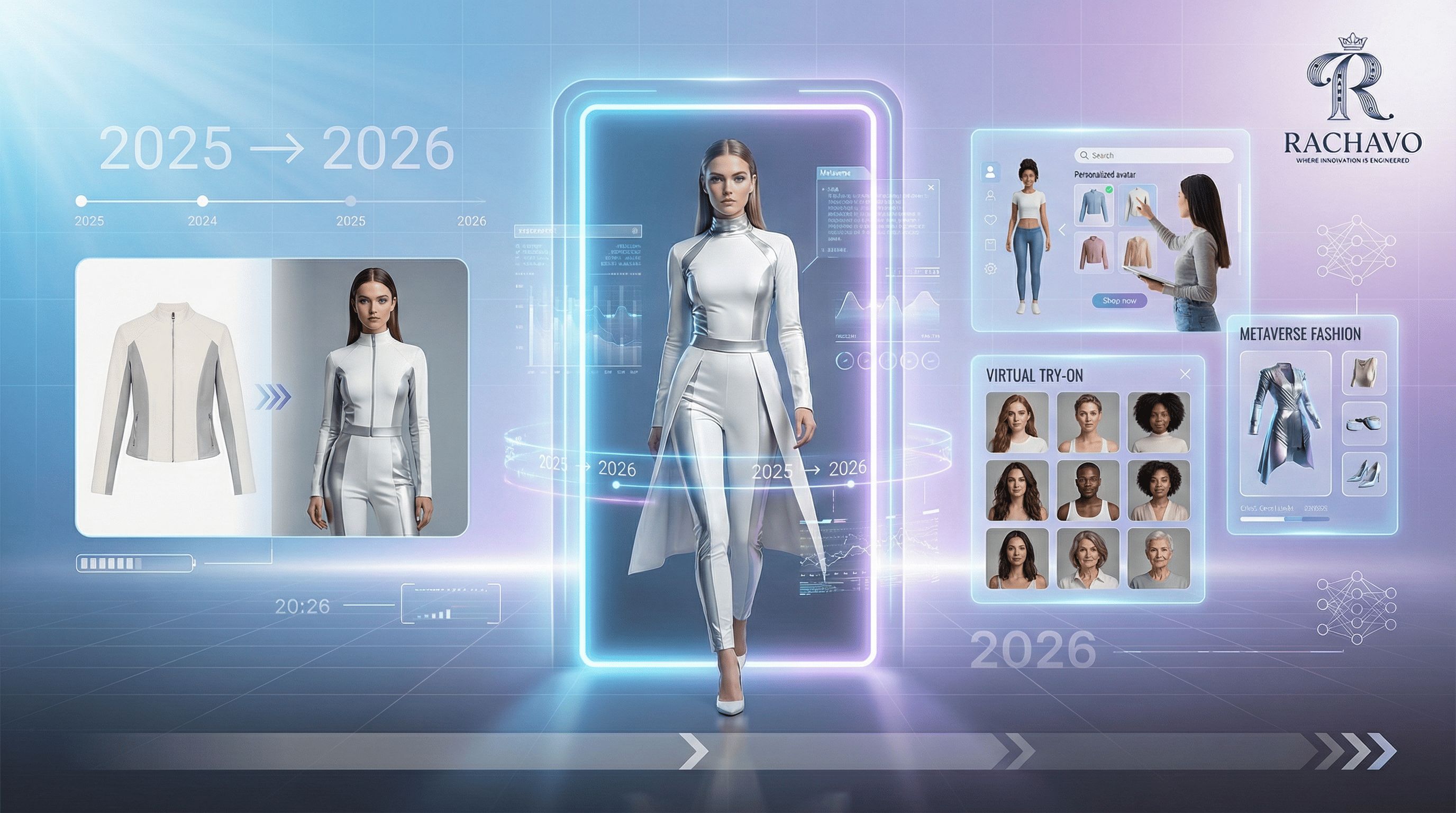
- Trend 2: Real-Time Virtual Try-On Goes Mainstream
- Trend 3: AI Influencers Dominate Social Commerce
- Trend 4: Regulatory Transparency Requirements
- Trend 5: Metaverse Fashion Integration
- Trend 6: Zero-Waste Design Through AI Visualization
- How Forward-Thinking Brands Are Preparing
- Technology Investments to Make Now
- The Competitive Advantage Window
- FAQ
- Conclusion
The 2026 Fashion Landscape
Fashion is approaching its biggest transformation since e-commerce itself. By 2026, the lines between physical and digital fashion will blur entirely.
What's driving the acceleration:
- Gen Z becoming the dominant spending demographic
- Climate regulations forcing sustainable practices
- AR/VR technology reaching mass adoption
- AI capabilities advancing exponentially month-over-month
Brands preparing now will dominate. Those waiting will scramble to catch up.
This guide explores the six defining trends of 2026 fashion technology—and exactly how to position your brand ahead of the curve.
Trend 1: Hyper-Personalized AI Shopping Avatars
What's Coming:
By 2026, customers won't browse products on generic models. They'll see every item on a digital twin of themselves.
How it works:
- Customer uploads 2-3 photos or completes a 30-second body scan via smartphone
- AI creates their personalized shopping avatar
- Every product across the entire store displays on THEIR body
- Size recommendations become precise
- Returns plummet dramatically
Why 2026 is the tipping point:
The technology exists today but requires friction (downloads, apps, patience). By 2026, browser-based instant avatar generation becomes seamless. Major retailers are already testing this with select customers.
Expected Impact:
- Return rates dropping by 40-60%
- Conversion rates increasing 35-50%
- Customer loyalty significantly improving
- Size-related customer service inquiries decreasing 70%
Brand Preparation Strategy:
Start building your AI model infrastructure now. Brands already using AI-generated models can easily transition to personalized avatars—the underlying technology is compatible.
👉 Build your AI foundation with RACHAVO: www.rachavo.com
Trend 2: Real-Time Virtual Try-On Goes Mainstream
What's Coming:
Forget static images. 2026 shoppers will see products on moving, breathing AI models—or themselves—in real-time video.
The experience:
- Browse product page
- Click "Try On Live"
- See AI model (or your avatar) walking, turning, sitting in the garment
- Observe how fabric moves, how fit changes with motion
- Watch the piece in different lighting conditions
Technology enablers:
- 5G becoming universal (bandwidth for real-time rendering)
- Edge computing reducing latency
- Advanced physics simulation for realistic fabric movement
- Lightweight AR accessible via standard browsers
Consumer Expectations Shift:
Early adopters are already demanding this. By 2026, static product photography will feel outdated—like websites without mobile optimization feel today.
Competitive Implications:
Brands offering immersive try-on will capture customers from those offering only static images. The experience gap will directly impact market share.
Trend 3: AI Influencers Dominate Social Commerce
What's Coming:
Virtual influencers—AI-generated personalities with millions of followers—will become primary fashion marketing channels.
Current state (2025):
- Lil Miquela: 2.7M Instagram followers
- Imma: 400K+ followers
- Shudu: Pioneering virtual supermodel
- Brand collaborations generating millions in revenue
2026 Projection:
- Every major brand will have proprietary virtual ambassadors
- AI influencers will cost 80% less than human influencer partnerships
- 24/7 content generation without scheduling conflicts
- Perfect brand alignment (no scandal risk, no off-brand behavior)
- Multilingual capabilities reaching global markets simultaneously
The Authenticity Question:
Surprisingly, Gen Z consumers show higher trust in transparent AI influencers than human influencers perceived as inauthentic. Honesty about AI nature actually builds credibility.
Strategic Opportunity:
Brands can create virtual ambassadors matching their exact customer demographics—age, style, values, aesthetic. These become ownable brand assets appreciating over time.
Trend 4: Regulatory Transparency Requirements
What's Coming:
The regulatory environment is shifting. By 2026, AI disclosure requirements will likely be mandatory in key Western markets.
Expected Regulations:
European Union:
- AI Act implementation requiring clear labeling
- Consumer protection directives addressing AI-generated content
- Transparency requirements for commercial imagery
United States:
- FTC guidance on AI disclosure in advertising
- State-level legislation (California leading)
- Industry self-regulation frameworks
United Kingdom:
- ASA (Advertising Standards Authority) guidelines
- Consumer Rights Act implications
- Digital Markets Act alignment
What This Means for Brands:
Disclosure won't hurt your brand—consumers already accept AI imagery. But non-compliance will create legal exposure and reputation risk.
Preparation Checklist:
- ✅ Document AI usage in product photography
- ✅ Prepare disclosure language for product pages
- ✅ Train customer service on AI imagery questions
- ✅ Update terms of service and privacy policies
- ✅ Create transparent communication strategy
The Upside:
Proactive transparency becomes a marketing advantage. "We use AI to show you products on diverse bodies sustainably" positions your brand as innovative AND ethical.
Trend 5: Metaverse Fashion Integration
What's Coming:
The metaverse isn't dead—it's quietly maturing. By 2026, virtual fashion becomes a legitimate revenue stream.
The Opportunity:
- Sell digital versions of physical garments
- Outfit avatars across platforms (gaming, social VR, virtual workplaces)
- Create "phygital" bundles (physical item + digital twin)
- Reach customers who may never buy physical products
Market Projections:
Virtual fashion and digital collectibles market expected to reach $50+ billion by 2030, with significant acceleration starting 2026.
Platform Integration:
Major gaming platforms, social VR spaces, and virtual workplace tools will support standardized digital fashion. Your AI-generated models become templates for these virtual garments.
First-Mover Advantage:
Brands building AI fashion capabilities now can seamlessly expand into digital fashion. The technology stack is compatible—3D product visualization, AI model generation, and virtual try-on all feed into metaverse fashion.
Trend 6: Zero-Waste Design Through AI Visualization
What's Coming:
AI models eliminate the need for physical samples during design and marketing phases.
Traditional Process (Wasteful):
- Design concept created
- Physical samples produced (multiple iterations)
- Samples photographed on models
- Revisions require new samples
- Unsold samples become waste
2026 Process (Sustainable):
- Design concept created digitally
- AI generates photorealistic visualization on diverse models
- Customer testing through virtual focus groups
- Only proven designs move to production
- First physical sample is the final product
Environmental Impact:
- 60-80% reduction in sample production
- Eliminated shipping for sample distribution
- Reduced returns (better visualization = accurate expectations)
- Lower overproduction (data-driven demand forecasting)
Regulatory Alignment:
EU textile waste regulations tightening through 2026. Brands demonstrating waste reduction through AI visualization gain compliance advantages and marketing opportunities.
How Forward-Thinking Brands Are Preparing
The smartest brands aren't waiting for 2026—they're building foundations today.
Phase 1: Foundation (Now - Q2 2025)
- Implement AI model generation for current product catalog
- Build internal expertise with AI fashion technology
- Establish photography workflow integrating AI
- Test customer response to AI-generated imagery
Phase 2: Expansion (Q3 2025 - Q4 2025)
- Scale AI imagery across entire product range
- Introduce diverse model representation systematically
- Begin virtual try-on pilot programs
- Develop AI content strategy for social channels
Phase 3: Innovation (2026)
- Launch personalized avatar shopping experiences
- Integrate real-time virtual try-on
- Explore virtual influencer partnerships
- Implement metaverse fashion offerings
The brands executing Phase 1 now will lead in 2026. Those starting in 2026 will spend years catching up.
Technology Investments to Make Now
Essential (Immediate Priority)
AI Model Generation Platform:
The foundation for everything else. Start generating AI model imagery for your products today.
👉 Get started with RACHAVO: www.rachavo.com
Product Photography Standardization:
Create consistent, high-quality flat-lay or mannequin shots that AI can transform into model imagery.
Digital Asset Management:
Organize product images, AI-generated content, and metadata for scalable operations.
Important (Next 6 Months)
3D Product Visualization:
Begin capturing products in 3D for future virtual try-on and metaverse applications.
Customer Data Infrastructure:
Prepare for personalized avatar generation by building robust customer profile systems.
Forward-Looking (12-18 Months)
AR/VR Integration:
Partner with platforms offering virtual try-on technology.
Virtual Influencer Development:
Explore creating brand-owned AI personalities.
The Competitive Advantage Window
Why timing matters:
The window for early-mover advantage is closing. Here's the competitive landscape:
2025 Adopters:
- Building expertise while competitors wait
- Establishing customer expectations around AI imagery
- Accumulating data on what converts
- Creating scalable, future-ready infrastructure
2026 Adopters:
- Scrambling to implement basic AI imagery
- Playing catch-up while competitors innovate
- Paying premium prices as demand surges
- Missing initial market opportunities
2027+ Adopters:
- Perceived as outdated by tech-savvy consumers
- Significant competitive disadvantage
- Higher implementation costs
- Struggling to recruit AI-skilled talent
The math is simple: Invest moderately now or invest heavily later while competitors capture market share.
❓ FAQ
Q: Is 2026 realistic for these predictions?
Yes. The underlying technologies exist today in early forms. 2026 represents mass-market adoption, not invention. Similar patterns occurred with mobile commerce (existed 2007, mainstream 2012) and social commerce (existed 2015, mainstream 2020).
Q: How much should brands budget for AI fashion technology?
Initial investment: $500-5,000/month depending on catalog size. This scales as capabilities expand. Compare to traditional photography costs—most brands see immediate ROI.
Q: Will AI replace human creativity in fashion?
No. AI handles execution (generating images, scaling content). Human creativity drives design, brand storytelling, and emotional connection. The best 2026 brands will blend AI efficiency with human artistry.
Q: What if the technology develops differently than predicted?
The specific implementations may vary, but the direction is certain: more personalization, more visualization, more digital integration. Building AI capabilities now prepares you for any evolution.
🎯 Conclusion
2026 isn't the distant future—it's 12 months away.
The brands winning in 2026 will be those building AI fashion capabilities today:
- ✅ Personalized shopping experiences customers expect
- ✅ Sustainable practices regulations require
- ✅ Diverse representation consumers demand
- ✅ Immersive visualization technology enables
- ✅ Scalable content business growth requires
The question isn't whether AI will transform fashion—it's whether your brand will lead or follow.
Start Building Your 2026 Advantage Today
Don't wait for the future. Create it.
Begin with AI model generation—the foundation for everything coming next.
👉 Launch your AI fashion journey with RACHAVO: www.rachavo.com
Upload your products. Generate professional AI model imagery. Build the infrastructure for 2026 and beyond.