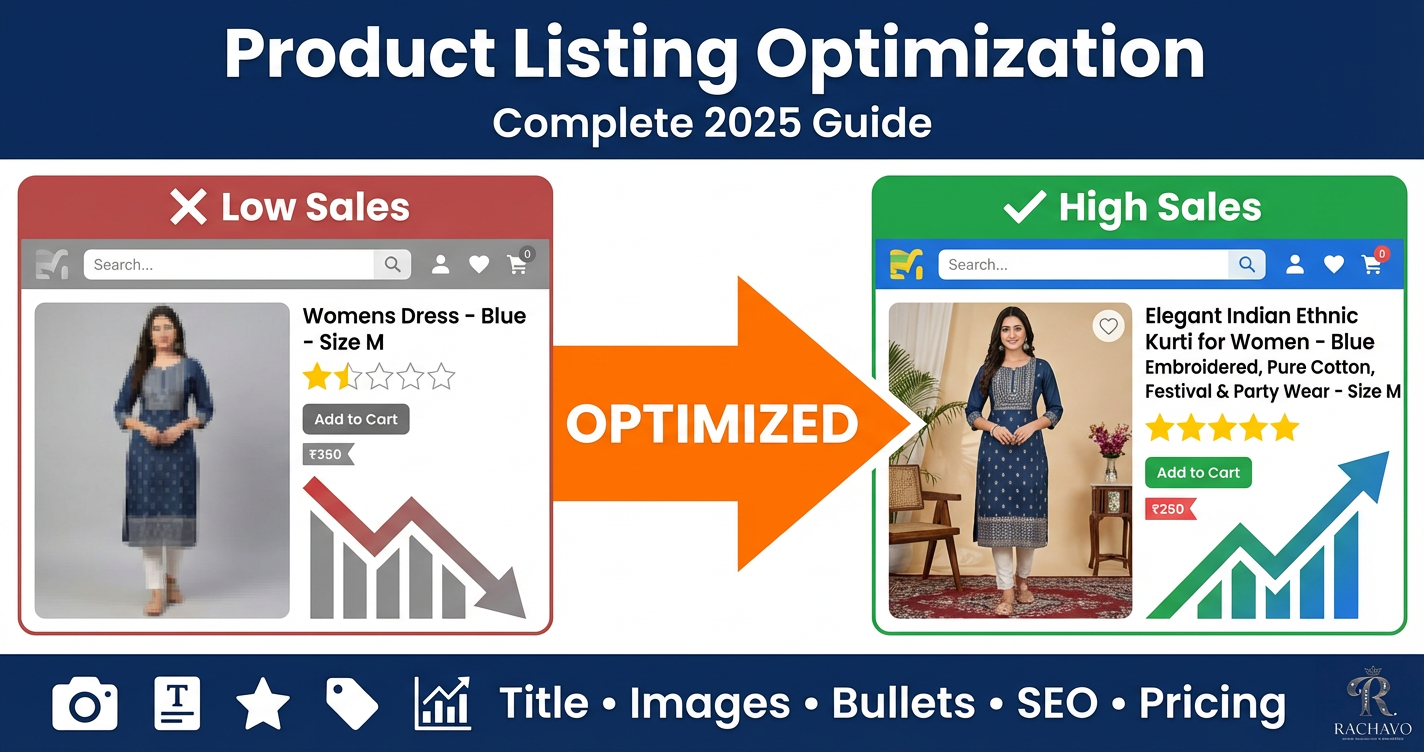
How to Optimize Product Listings for Maximum Sales: Complete 2025 Guide
📑 Table of Contents
- Why Product Listing Optimization Matters
- Product Title Optimization
- Product Images That Convert
- Bullet Points That Sell
- Product Description Best Practices
- Pricing Strategy for Maximum Sales
- Reviews and Ratings
- Backend Keywords and SEO
- Quick Optimization Checklist
Why Product Listing Optimization Matters
Your listing has one job: Convert browsers into buyers.
Impact of Optimization:
- Visibility: Optimized listings rank higher in search results
- Click-Through Rate: Better images and titles = more clicks
- Conversion Rate: Clear information = more purchases
- Return Rate: Accurate details = fewer disappointed customers
The Numbers:
- Optimized listings get 30-50% more clicks
- Professional images increase conversion by 40%
- Complete listings (9 images, detailed bullets) convert 2x better than incomplete ones
Product Title Optimization
Your title is the first thing customers see. Make it count.
Title Formula That Works:
[Brand] + [Product Type] + [Key Features] + [Size/Color/Material] + [Target Customer]
✅ GOOD Title Example:
"ZARA Women's Cotton Floral Printed A-Line Kurti - Full Sleeves, Knee Length, Casual Wear (Navy Blue, M)"
- Clear product type: Kurti
- Material: Cotton
- Key features: Floral printed, A-line, full sleeves
- Use case: Casual wear
- Specifics: Color and size
❌ BAD Title Example:
"Beautiful Kurti for Women"
- Too vague
- No key details
- Missing searchable terms
Title Optimization Rules:
DO:
- ✅ Include main keywords customers search for
- ✅ Mention material, size, color
- ✅ Add key benefits (wrinkle-free, stretchable)
- ✅ Keep most important words first
- ✅ Use proper capitalization
DON'T:
- ❌ Stuff keywords unnaturally
- ❌ Use ALL CAPS (except brand names)
- ❌ Add promotional language ("Best seller!", "50% off!")
- ❌ Exceed character limits (Amazon: 200 chars, Flipkart: 200 chars)
- ❌ Use special characters (★, ☆, →)
Platform-Specific Limits:
| Platform | Character Limit | Best Practice |
| Amazon India | 200 characters | Use 150-180 |
| Flipkart | 200 characters | Use 150-180 |
| Meesho | 100 characters | Use 80-100 |
Pro Tip: Front-load your title with the most important keywords. Mobile users only see the first 60-80 characters.
Product Images That Convert
Images are your silent salespeople. 85% of customers say product images are more important than descriptions.
The Perfect Image Set (9 Images):
Image 1: Main Image
- Pure white background (RGB 255, 255, 255)
- Product fills 85% of frame
- Sharp, high-resolution (minimum 2000x2000px)
- No text, watermarks, or borders
Images 2-3: Multiple Angles
- Front, back, and side views
- Show complete product clearly
- White background preferred
Image 4: Close-Up Details
- Fabric texture
- Stitching quality
- Embroidery/print details
- Shows craftsmanship
Images 5-6: Lifestyle/Context
- Model wearing product (front and back)
- Real-world setting
- Helps customers visualize
- Shows fit and drape
Image 7: Size Chart
- Measurements (bust, waist, hip, length)
- How to measure guide
- Size recommendations (slim/regular/loose fit)
- Reduces size-related returns by 30%
Image 8: Features Infographic
- Fabric composition
- Care instructions
- Special features (pockets, stretch, etc.)
- Occasion suitability
Image 9: Styling Suggestions
- "How to style this" ideas
- Pairing suggestions
- Multiple look options
Image Quality Checklist:
- ✅ All images 2000x2000 pixels minimum
- ✅ Sharp focus, good lighting
- ✅ Accurate colors (match actual product)
- ✅ Mobile-optimized (looks good on small screens)
- ✅ Consistent style across all images
- ✅ Shows product from every important angle
Quick Win: Add 6+ more images to your listing today. Listings with 7-9 images convert 60% better than those with only 2-3 images.
Bullet Points That Sell
Bullet points are where you highlight key features and benefits. Most customers read these before the full description.
Bullet Point Formula:
[FEATURE] + [BENEFIT] + [Customer Value]
✅ GOOD Bullet Point Examples:
❌ Weak: "Made from cotton fabric"
✅ Strong: "Premium 100% Cotton Fabric - Breathable and soft material keeps you comfortable all day, perfect for Indian summer weather"
❌ Weak: "Has pockets"
✅ Strong: "Convenient Side Pockets - Practical hidden pockets to carry essentials like phone and keys without spoiling the silhouette"
❌ Weak: "Available in multiple sizes"
✅ Strong: "Perfect Fit Guaranteed - Available in 5 sizes (S to XXL) with detailed size chart. Regular fit suitable for all body types"
Bullet Point Best Practices:
Structure (5 Bullet Points):
- Main Feature/Material - What it's made of and why that matters
- Design/Style Details - Pattern, cut, special design elements
- Fit and Comfort - How it fits, comfort features
- Practical Benefits - Pockets, easy care, versatility
- Occasion/Usage - When and where to wear it
Writing Tips:
- ✅ Start with benefit, then explain feature
- ✅ Use sensory words (soft, smooth, lightweight)
- ✅ Address customer pain points
- ✅ Include measurements where relevant
- ✅ Keep each bullet under 200 characters
DON'T:
- ❌ Repeat title information
- ❌ Use promotional language
- ❌ Make unverifiable claims ("world's best")
- ❌ Ignore mobile readers (keep it scannable)
Product Description Best Practices
Your description closes the sale. It answers detailed questions and builds confidence.
Description Structure:
Opening Paragraph (Hook):
Start with the transformation or main benefit.
"Elevate your ethnic wardrobe with this elegant cotton kurti that combines traditional craftsmanship with modern comfort. Perfect for office wear, family gatherings, or casual outings."
Section 1: Product Details
- Fabric composition
- Design elements
- Construction quality
- Available options (colors, sizes)
Section 2: Features & Benefits
- Detailed feature explanation
- How each feature benefits the customer
- Use cases and versatility
Section 3: Fit & Care
- Fit description (true to size? runs small/large?)
- Care instructions (wash, iron, storage)
- Durability information
Section 4: Styling Suggestions
- What to pair it with
- Occasion recommendations
- Seasonal suitability
Closing: Assurance
- Quality guarantee
- Return/exchange policy mention
- Customer support availability
Description Writing Tips:
DO:
- ✅ Use short paragraphs (2-3 lines max)
- ✅ Include relevant keywords naturally
- ✅ Tell a story customers connect with
- ✅ Address common questions/concerns
- ✅ Use formatting (bold, bullets) for readability
DON'T:
- ❌ Copy-paste manufacturer descriptions
- ❌ Use complex jargon
- ❌ Make it too long (500-800 words is ideal)
- ❌ Ignore mobile formatting
Pro Tip: Write descriptions that answer the questions customers would ask in a physical store.
Pricing Strategy for Maximum Sales
Price isn't just a number—it's a powerful psychological tool.
Pricing Optimization Tactics:
1. Competitive Positioning
- Research competitor pricing
- Position within top 20% or bottom 30% (avoid middle)
- Premium products: Price 15-20% higher with clear value justification
- Volume products: Price 5-10% lower than market average
2. Psychological Pricing
- Use ₹499 instead of ₹500 (charm pricing)
- Use ₹999 instead of ₹1000
- Bundle pricing for sets (better perceived value)
3. Dynamic Pricing
- Adjust for demand (festive seasons)
- Weekend vs weekday pricing
- Flash sale participation
4. Display Strategy
- Show MRP (Maximum Retail Price) with discount
- "₹1,499 ₹999 (33% off)" converts better than just "₹999"
- Highlight savings, not just price
Pricing Don'ts:
- ❌ Race to bottom on price alone (competes on value, not just price)
- ❌ Frequent price changes (confuses customers)
- ❌ Fake MRP inflation (illegal and unethical)
Reviews and Ratings
Social proof is crucial. 85% of customers read reviews before purchasing.
Getting More Reviews:
1. Request Reviews Properly
- Send follow-up messages 5-7 days after delivery
- Use marketplace's built-in review request features
- Make it easy (direct link to review page)
2. Improve Review Quality
- Include clear product information (reduces negative "not as described" reviews)
- Accurate size charts (reduces "size didn't fit" complaints)
- Quality packaging (creates positive unboxing experience)
3. Respond to Reviews
- Thank positive reviewers
- Address negative reviews professionally
- Offer solutions publicly (shows customer service commitment)
Managing Negative Reviews:
When you get 1-2 star reviews:
- Respond within 24 hours
- Acknowledge the issue (even if you disagree)
- Offer solution (replacement, refund, assistance)
- Take conversation offline (provide contact details)
- Learn and improve (fix recurring issues)
Example Response:
"We're sorry to hear the size didn't fit perfectly. We'd love to help you find the right size or process an easy exchange. Please contact us at [support details]. Your feedback helps us improve our size chart for all customers."
Backend Keywords and SEO
Backend keywords help your listing appear in searches without cluttering your visible content.
Keyword Research Process:
1. Find What Customers Search:
- Amazon/Flipkart search suggestions
- Google Keyword Planner
- Competitor listing analysis
- Customer review language
2. Categorize Keywords:
Primary Keywords (Include in Title):
- Main product type: "cotton kurti", "embroidered lehenga"
Secondary Keywords (Include in Bullets/Description):
- Variations: "kurta", "kurti for women", "ethnic wear"
Backend Keywords (Add in seller panel):
- Synonyms: "kurtha", "kurthi"
- Spelling variations
- Related terms: "Indian wear", "traditional dress"
Backend Keyword Rules:
DO:
- ✅ Use all 250 bytes (Amazon) or available space
- ✅ Separate with spaces (not commas)
- ✅ Include common misspellings
- ✅ Add regional language terms (transliterated)
- ✅ Include occasion keywords (wedding, party, office)
DON'T:
- ❌ Repeat keywords already in title/bullets
- ❌ Use competitor brand names
- ❌ Include irrelevant terms
- ❌ Use punctuation or special characters
Quick Optimization Checklist
Use this to audit and optimize any product listing:
✅ Title
- Includes main keyword in first 50 characters
- Mentions material, color, size
- 150-180 characters total
- No promotional language or special characters
✅ Images
- 9 high-quality images (2000x2000px minimum)
- Main image: white background, 85% fill
- Multiple angles (front, back, side)
- Lifestyle images with model
- Size chart included
- Features infographic
- All images sharp and color-accurate
✅ Bullets
- 5 bullet points filled
- Each highlights feature + benefit
- Addresses customer pain points
- Under 200 characters each
- No repetition from title
✅ Description
- 500-800 words
- Structured with clear sections
- Includes styling and care information
- Mobile-friendly formatting
- Natural keyword inclusion
✅ Pricing
- Competitively researched
- Psychological pricing applied (₹499, ₹999)
- MRP shown with discount percentage
- Profitable after marketplace fees
✅ Other Elements
- Correct category selection
- All variants (colors/sizes) added
- Backend keywords optimized
- Shipping settings configured
- Inventory in stock
Final Tips for Maximum Sales
1. Test and Iterate
- Change one element at a time
- Monitor impact on conversion rate
- A/B test titles and images when possible
2. Keep Updated
- Refresh images seasonally
- Update descriptions for festivals/occasions
- Adjust keywords based on search trends
3. Mobile-First Approach
- 80%+ customers shop on mobile
- Ensure everything looks good on small screens
- Keep text concise and scannable
4. Consistency Across Platforms
- Maintain similar quality on Amazon, Flipkart, Meesho
- Adapt to each platform's specific requirements
- Track which platform converts best
5. Learn from Data
- Check which search terms bring traffic
- Analyze where customers drop off
- Use insights to refine listing
Conclusion
Product listing optimization isn't one-time work—it's an ongoing process.
Start Today:
- Audit your current listings using the checklist above
- Fix critical issues first (missing images, poor titles)
- Optimize one element per week (images this week, bullets next week)
- Monitor results (traffic, conversion, sales)
- Continuously improve based on data and customer feedback
Remember: A perfectly optimized listing is your 24/7 salesperson. Invest time in getting it right, and it will pay dividends for months to come.
Your products deserve to be seen and sold. Now you have the complete guide to make that happen.
What will you optimize first?
Ready to create professional product images for your optimized listings? AI-powered tools can help you generate compliant, high-converting product photos in minutes—without expensive equipment or photoshoots.