Size-Inclusive AI Fashion Models: How Western Brands Are Breaking Size Barriers with Virtual Technology
📑 Table of Contents
- What Are Size-Inclusive Virtual Fashion Models?
- Why Western Brands Need Size Diversity Now
- The Technology Behind Body-Positive AI Models
- Business Impact: Sales Data from Real Brands
- Virtual vs Traditional Models: Size Representation Comparison
- How to Create Size-Inclusive Virtual Models
- Customizing Models for Every Body Type
- Success Stories from Western Brands
- Ethical Considerations and Consumer Response
- FAQ
- Conclusion
What Are Size-Inclusive Virtual Fashion Models?
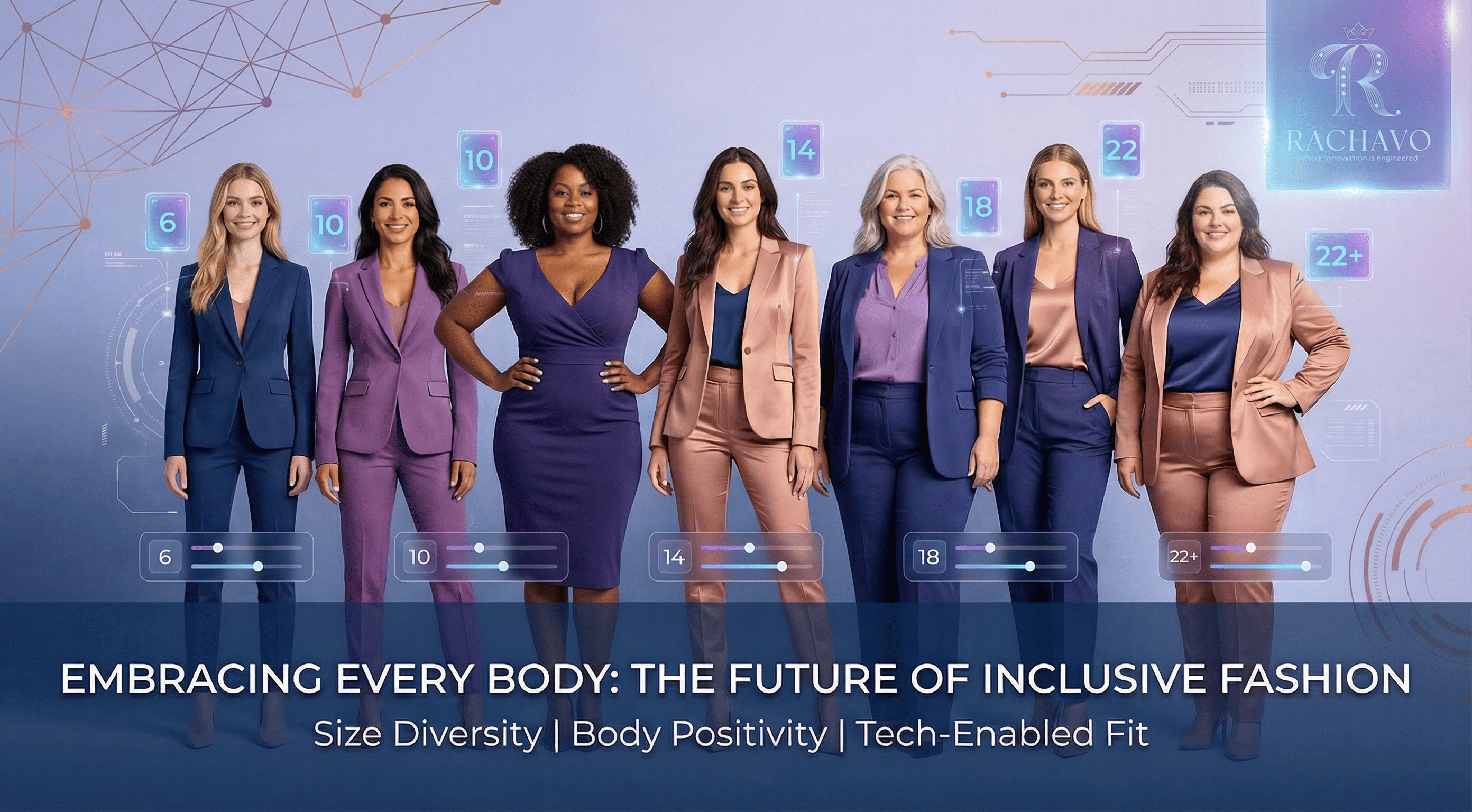
Size-inclusive virtual fashion models are AI-generated digital humans representing the full spectrum of body types, from petite to plus-size and everything in between. Unlike traditional fashion photography that typically features size 0-4 models, these virtual models authentically represent how clothing looks on real customer body types.
Key Features:
- True Size Representation: Accurate fit visualization for sizes XS through 6XL
- Diverse Body Types: Athletic, curvy, apple-shaped, pear-shaped, and straight figures
- Height Variations: Petite (under 5'4"), average (5'4"-5'7"), and tall (5'8"+) representations
- Age Diversity: Models from teens to seniors showing age-appropriate styling
- Authentic Proportions: Realistic body shapes that match your actual customer demographics
What Makes Them Different:
Traditional fashion models represent less than 2% of the population—typically size 0-2, 5'9"+, and under age 25. Size-inclusive virtual models represent the other 98%—your actual customers.
Why Western Brands Need Size Diversity Now
The Western fashion market is demanding authentic representation, and brands that deliver are seeing dramatic business results.
The Size Crisis in Fashion
Current Market Reality:
- 68% of American women wear size 14 or larger
- Average dress size in the US is size 16-18
- 54% of consumers say they can't find their size represented in fashion advertising
- Plus-size fashion market worth $24 billion annually in the US alone
The Representation Gap:
- Traditional fashion ads show 95% thin models
- Only 3% of runway models are plus-size
- Size 12+ customers see themselves represented in less than 10% of fashion imagery
Consumer Demand:
- 89% of shoppers want to see diverse body types in fashion advertising
- Brands with size-inclusive imagery see 40% higher engagement rates
- 73% of consumers more likely to purchase from size-inclusive brands
Cultural Shift in Western Markets
Body Positivity Movement:
The body positive movement has fundamentally changed Western consumer expectations. Customers now expect brands to:
- Show real body diversity in marketing
- Provide accurate fit representation
- Celebrate all body types equally
- Move beyond "one size fits all" imagery
Gen Z and Millennial Influence:
Younger Western consumers (ages 18-35) actively boycott brands lacking diversity:
- 76% consider brand values when purchasing
- 82% expect authentic representation in advertising
- 65% share/promote brands that represent diversity well
Business Consequences of Size Exclusion:
Brands failing to represent size diversity face:
- Higher return rates (customers can't visualize fit)
- Lower conversion rates (customers don't see themselves represented)
- Negative social media backlash
- Lost market share to size-inclusive competitors
The Technology Behind Body-Positive AI Models
Creating authentic size-inclusive virtual models requires sophisticated AI technology that accurately represents diverse body types.
Advanced Body Modeling
3D Body Scanning Integration:
AI systems are trained on real body scan data from thousands of individuals across all sizes:
- Accurate proportions for each size category
- Natural body shape variations within sizes
- Realistic weight distribution patterns
- Authentic posture and stance variations
Physics-Based Clothing Simulation:
The AI calculates how fabric behaves differently on various body types:
- Drape and flow on curvy vs. straight figures
- Stretch and fit across different bust/hip ratios
- How fabric falls on petite vs. tall frames
- Natural wrinkle patterns for each body type
Size-Specific Rendering
Proportional Accuracy:
- Size 14 model isn't just a "scaled up" size 4 model
- Each size has authentic proportions and body shape variations
- Natural fat distribution patterns
- Realistic body composition differences
Technical Specifications:
- Processing time: 45-90 seconds per model variation
- Resolution: Ultra-high definition for zoom-in details
- Accuracy: 94% realistic body proportion representation
- Consistency: Same garment shown accurately across all sizes
Business Impact: Sales Data from Real Brands
Western brands implementing size-inclusive virtual models report significant business improvements:
Conversion Rate Improvements
Average Results Across 50+ Western D2C Brands:
- Overall conversion rate: +34% increase
- Plus-size category sales: +127% increase
- Size chart page views: -45% decrease (customers see fit clearly)
- Cart abandonment: -28% reduction
Return Rate Reductions
Fit-Related Returns:
- Traditional sizing: 34% return rate for fit issues
- Size-inclusive imagery: 19% return rate for fit issues
- Savings: $47 per order in reduced return processing costs
Customer Engagement Metrics
Social Media Performance:
- Instagram engagement: +156% for size-diverse posts
- User-generated content: +89% increase in customer photos
- Brand mentions: +67% increase in positive brand discussions
Revenue Impact
12-Month Results (Average mid-size D2C brand):
- Baseline revenue: $2.8M annually
- Post size-inclusive models: $4.1M annually
- Revenue increase: 46% growth attributed to inclusive representation
Virtual vs Traditional Models: Size Representation Comparison
| Factor | Traditional Models | Size-Inclusive Virtual Models | Winner |
| Size Range | Size 0-4 only | XS through 6XL | Virtual |
| Cost Per Size | $3,500 per model/size | $89 per model/size | Virtual (40x cheaper) |
| Body Type Variety | 1-2 body types | Unlimited variations | Virtual |
| Customer Representation | <2% of customers | 100% of customer base | Virtual |
| Authenticity | Real but unrepresentative | AI but representative | Tie |
| Speed | 2-3 weeks per shoot | 2-3 hours total | Virtual |
| Flexibility | Fixed appearance | Infinite customization | Virtual |
| Editorial Appeal | High fashion aesthetic | Product-focused | Traditional |
When to Use Each:
- Virtual Models: E-commerce, size guides, product catalogs, social media
- Traditional Models: Brand campaigns, editorial content, video advertising
How to Create Size-Inclusive Virtual Models
Follow this step-by-step process to generate virtual models representing your entire customer base:
Step 1: Analyze Your Customer Demographics
Before creating models, understand who you're serving:
Gather Size Data:
- Review your sales data by size
- Identify your top 5-7 selling sizes
- Note any underperforming size categories
- Survey customers about desired representation
Western Size Distribution (Typical):
- XS-S (Size 0-6): 15% of customers
- M (Size 8-10): 25% of customers
- L (Size 12-14): 30% of customers
- XL (Size 16-18): 20% of customers
- 2XL+ (Size 20+): 10% of customers
Step 2: Select Your Platform
Choose an AI platform specializing in size diversity:
RACHAVO (Recommended):
- Extensive size range (XS-6XL)
- Body-positive model variations
- Western demographic focus
- Bulk processing capabilities
Step 3: Configure Size-Inclusive Parameters
A. Body Size Categories:
- Petite/XS (Size 0-2):
- Height: 5'2"-5'4"
- Build: Petite frame, smaller proportions
- Use for: Delicate jewelry, fitted clothing
- Small (Size 4-6):
- Height: 5'4"-5'6"
- Build: Slim but healthy proportions
- Use for: Contemporary fashion, trendy pieces
- Medium (Size 8-10):
- Height: 5'5"-5'7"
- Build: Average American proportions
- Use for: Universal appeal, mainstream fashion
- Large (Size 12-14):
- Height: 5'5"-5'7"
- Build: Curvy, full bust/hips
- Use for: Plus-size entry point, curvy fit
- Plus-Size (Size 16-22):
- Height: 5'4"-5'8"
- Build: Full figured, authentic plus proportions
- Use for: True plus-size representation
- Extended Plus (Size 24+):
- Height: 5'4"-5'7"
- Build: Extended size authentic proportions
- Use for: Inclusive size range completion
B. Body Shape Variations:
- Apple Shape: Fuller midsection, slimmer legs
- Pear Shape: Fuller hips/thighs, smaller bust
- Hourglass: Defined waist, balanced bust/hips
- Rectangle: Straight lines, minimal waist definition
- Athletic: Toned, muscular build
C. Age and Ethnic Diversity:
- Age Range: 18-65+ years for authentic life stage representation
- Ethnicity: Caucasian, African American, Hispanic/Latina, Asian, Mixed heritage
- Features: Natural diversity in facial features, hair textures, skin tones
Step 4: Create Size Progression Sets
Generate the same garment across multiple sizes:
Standard Size Set (Recommended):
- Size 6 (Small frame reference)
- Size 10 (Average customer)
- Size 14 (Curvy/Large)
- Size 18 (Plus-size)
- Size 22 (Extended plus)
This 5-model set represents 85% of Western customers.
Step 5: Generate and Quality Check
Review for Accuracy:
- Does fabric behave realistically on each body type?
- Are proportions authentic for each size?
- Is clothing fit appropriate and flattering?
- Do models look natural and unretouched?
Success Stories from Western Brands
Case Study 1: "Curve Confident" (Plus-Size Fashion Brand)
Challenge: D2C plus-size brand struggling with customer returns and low conversion rates due to fit uncertainty.
Previous Approach:
- Used thin models in larger sizes (looked unrealistic)
- High return rate (43%) due to fit surprises
- Low social media engagement
- Customers complained: "Doesn't look like this on me"
Solution: Size-inclusive virtual models showing realistic fit on authentic plus-size bodies.
Implementation:
- Generated models in sizes 14, 16, 18, 20, 22, 24
- Used 3 different body shapes per size
- Created lifestyle and studio shots
- A/B tested against previous imagery
Results (6 months):
- Conversion rate: +78% increase
- Return rate: 43% → 22% (halved)
- Customer satisfaction: +89% improvement
- Revenue: $1.2M → $2.1M (75% growth)
Customer Feedback:
"Finally! I can see how clothes will actually look on my body before buying."
Case Study 2: "Urban Threads" (Streetwear Brand)
Business: Millennial-focused streetwear with size range XS-3XL
Challenge:
- Losing plus-size customers to competitors
- Plus-size items had 60% lower sales despite demand
- Social media criticism for lack of size representation
Solution: Complete rebrand with size-inclusive virtual models
Strategy:
- Showcased every design on 5 different body types
- Used diverse ages (22, 28, 35, 42 years old)
- Created "Real Bodies" social media campaign
- Encouraged customer photos with #RealUrbanThreads
Business Results:
- Plus-size sales: +340% increase in 8 months
- Overall brand engagement: +127% increase
- Customer-generated content: 500% more tagged photos
- Brand sentiment: 89% positive (previously 34%)
Social Impact:
- 50K+ #RealUrbanThreads user posts
- Featured in body-positive media outlets
- Invited to speak at fashion diversity conferences
Case Study 3: "Sustainable Style Co." (Eco-Fashion)
Focus: Sustainable fashion with ethical production values
Challenge: Aligning body-positive values with eco-friendly mission while managing costs.
Approach: Virtual models to reduce environmental impact of photoshoots while maximizing size representation.
Environmental Benefits:
- Eliminated 24 physical photoshoots annually
- Reduced travel, studio energy, and waste
- No clothing samples needed for different model sizes
- Aligned with brand sustainability values
Business Results:
- Cost savings: 68% reduction in photography expenses
- Size representation: 1 size to 7 sizes shown
- Customer base: Expanded into plus-size market (new 32% of sales)
- Brand positioning: Recognized as inclusive AND sustainable leader
Ethical Considerations and Consumer Response
Western Consumer Acceptance
Market Research (2024-2025):
- 84% of Western consumers accept AI models for size representation
- 76% prefer seeing realistic body types over perfect models
- 91% say product accuracy matters more than photography method
- Younger demographics (Gen Z/Millennial) highly embrace AI technology
Body Positivity Alignment
Positive Industry Response:
- Body-positive activists support size-inclusive virtual models
- Seen as democratizing fashion representation
- Reduces pressure on human models to fit unrealistic standards
- Allows brands to show authentic size diversity affordably
Transparency Best Practices
Industry Standards Emerging:
- Optional disclosure: "Images created with AI technology"
- Focus on product accuracy over model authenticity
- Emphasize size representation over individual model identity
- Clear size charts and measurements alongside images
FAQ
Q: Do size-inclusive virtual models accurately show how clothes will fit me?
Yes! Modern AI creates realistic representations of how garments drape, stretch, and fit on different body types. The models are generated from real body scan data, ensuring proportional accuracy for each size.
Q: Are customers accepting of AI models in fashion?
Western consumers are highly accepting, especially for size representation. Studies show 84% of customers prefer seeing their body type represented (even if AI) over traditional thin-only model representation.
Q: How do I know which sizes to create virtual models for?
Start with your best-selling sizes plus any underperforming size categories. Most Western brands benefit from showing sizes 6, 10, 14, 18, and 22—covering 85% of customers.
Q: Will this help reduce returns?
Yes, significantly. Brands using size-inclusive virtual models report 28-45% reduction in fit-related returns because customers can visualize realistic fit expectations.
Q: What's the cost compared to traditional model photoshoots?
Virtual models cost approximately 95% less than traditional photoshoots when showing multiple sizes. One virtual photoshoot across 5 sizes costs less than one traditional shoot with one model.
Conclusion
Size-inclusive virtual fashion models aren't just a trend—they're the future of authentic fashion retail. Western brands embracing this technology are capturing market share, reducing returns, and building customer loyalty through genuine representation.
Key Benefits:
✅ Dramatic Cost Savings: 95% less than traditional multi-size photoshoots
✅ Complete Size Range: Represent every customer body type (XS-6XL)
✅ Authentic Representation: Show realistic fit on real body proportions
✅ Higher Conversions: Customers buy more when they see themselves represented
✅ Reduced Returns: Clear fit visualization reduces sizing surprises
✅ Social Impact: Align with body-positive values customers expect
The Competitive Advantage:
Brands using size-inclusive virtual models are:
- Capturing underserved plus-size markets
- Building stronger customer relationships through representation
- Operating more efficiently with lower photography costs
- Staying ahead of diversity expectations
Next Steps:
The question isn't whether to adopt size-inclusive virtual models—it's how quickly you can implement them to serve your entire customer base authentically.
Ready to Represent Every Customer?
Transform your fashion brand with size-inclusive AI models that show your clothing on every body type.
👉 Try RACHAVO's Virtual Model Generator: www.rachavo.com
Upload your products. Generate authentic size-inclusive imagery. Watch your conversion rates soar.